The Mystery of the F-15 Crash in Kuwait: A Deep Dive into Conflicting Narratives
On a tense morning in early March, the skies over Kuwait became the backdrop for a dramatic incident that quickly captured global attention. An American F-15 fighter jet crashed, prompting immediate speculation and conflicting claims. While the pilot's miraculous survival, captured in viral videos, offered a moment of relief, the underlying cause of the crash remains shrouded in mystery. Was this a technical malfunction, a tragic case of friendly fire, or a deliberate act of aggression from a regional adversary like Iran? This article delves into the available facts, examines the competing theories, and explores the broader implications for security and stability in the Middle East, particularly concerning the event where an f-15 разбился кувейт.
The Dramatic Incident: An American F-15 Crashes Near Ali al-Salem Air Base
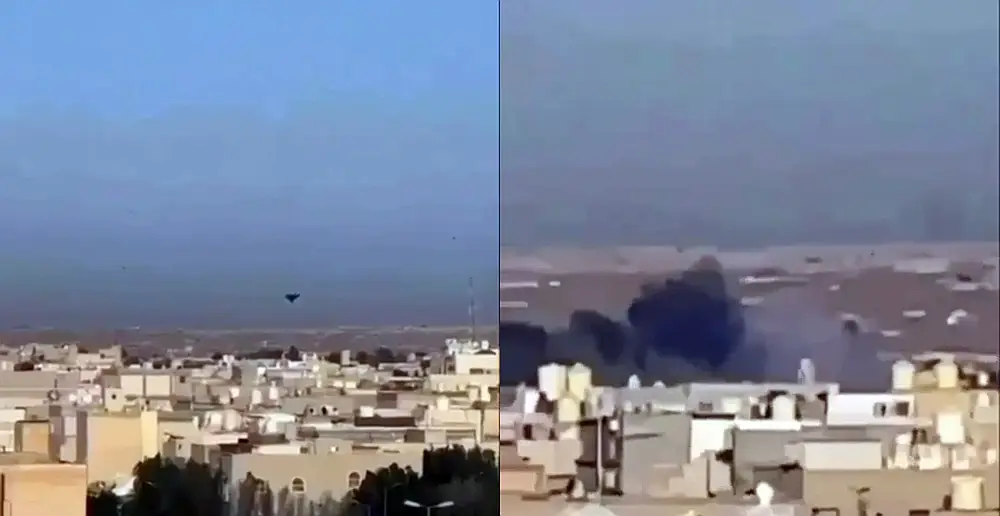
The incident unfolded swiftly, with initial reports emerging on March 2nd. Eyewitness accounts and videos quickly circulated online, showing an American F-15 fighter jet in distress before impacting the ground. Perhaps the most compelling and heartwarming aspect of the immediate aftermath was the survival of the pilot. Viral footage clearly depicted the pilot ejecting from the doomed aircraft mere seconds before it crashed. Another widely shared video showed the pilot, apparently uninjured, being safely transported by local Kuwaiti citizens in the trunk of their car – a testament to both the effectiveness of modern ejection systems and the quick actions of the local population. For more details on the pilot's survival, you can read our related article: US F-15 Crash in Kuwait: Pilot Survives Dramatic Ejection, Video Emerges.
The crash site was identified as being within a 10-kilometer radius of the U.S. air base Ali al-Salem in Kuwait. This proximity immediately raised questions about the aircraft's mission and the circumstances leading to its fall. While initial analyses from sources like CNN suggested the aircraft could be an F-15E or an F/A-18, given that Kuwait also operates F/A-18s, subsequent official and media reports largely converged on identifying the aircraft as an F-15. The F-15 Strike Eagle, a cornerstone of American air superiority and strike capabilities, is known for its versatility as an all-weather, multi-role fighter-bomber capable of engaging both air and ground targets over long distances. Its reputation as one of the most successful U.S. strike aircraft, combining high speed, substantial payload, and impressive range, makes the loss of such an asset a significant event.
Adding another layer of complexity to the narrative, a Kuwaiti Ministry of Defense official confirmed that morning that several American military aircraft had crashed, and remarkably, all their crews survived. This statement indicated a broader pattern of incidents rather than an isolated event, further intensifying the need for clarity. The official urged the public to rely solely on official sources for information as investigations were underway. Our article, Kuwait Confirms Multiple US Military Crashes: F-15 Pilot Survives, Probe On, provides additional context on these confirmations.
Unraveling the Mystery: Friendly Fire or Iranian Aggression?
In the wake of the crash, two primary theories quickly emerged to explain the downing of the U.S. fighter jet, highlighting the volatile geopolitical environment of the region:
The Iranian Claim: A Bold Assertion
Almost immediately, certain Iranian outlets and proxy groups began asserting responsibility for shooting down the American F-15. These claims, often amplified through social media channels, depicted the incident as a successful act of aggression against U.S. forces. While such claims are not uncommon in periods of heightened tension between Iran and the U.S., they rarely come with verifiable evidence. Iran's motive behind such an assertion, even if unsubstantiated, could be multifaceted: to project an image of military capability, to undermine U.S. regional presence, or to rally domestic support. However, without any corroborating evidence from independent sources or official confirmation, these claims remain in the realm of propaganda.
The Friendly Fire Hypothesis: A Troubling Possibility
Another compelling, albeit concerning, theory that gained traction among OSINT (Open-Source Intelligence) channels and defense analysts was the possibility of "friendly fire." This hypothesis suggested that the F-15 might have been accidentally shot down by Kuwaiti air defense systems. Several factors lent credence to this idea:
- Shared Airspace & Operations: The airspace over Kuwait is frequently active with joint U.S. and Kuwaiti military operations. In complex training exercises or heightened states of alert, the risk of misidentification by air defense systems, especially under pressure, can unfortunately increase.
- Kuwaiti Air Defense Capabilities: Kuwait operates its own sophisticated air defense systems, which are designed to protect its sovereign airspace. While these systems are highly advanced, human error, technical glitches, or miscommunication during dynamic situations can lead to tragic accidents.
- The Context of Multiple Crashes: The Kuwaiti Ministry of Defense's statement about "several" U.S. military aircraft crashing that morning could, in some interpretations, point towards a systemic issue, perhaps a malfunction in air traffic control, command and control, or even accidental engagement during a large-scale exercise that went wrong. While not definitive, it adds a layer of concern beyond a single, isolated incident.
Historically, friendly fire incidents, though rare, have occurred in various conflicts and exercises, serving as stark reminders of the inherent dangers and complexities of military operations, especially in alliance settings. It's crucial for any investigation to thoroughly examine communication logs, radar data, and engagement protocols to rule out such a possibility.
Geopolitical Tensions and Regional Airspace Safety
The timing of the F-15 crash in Kuwait is particularly noteworthy given the broader geopolitical climate in the Middle East. Just hours before the incident, on the morning of March 2nd, the U.S. Embassy in Kuwait issued a security alert warning of potential new missile and drone strikes from Iran. This warning underscored the persistent threat environment and the delicate balance of power in the region, where U.S. forces are stationed to deter aggression and protect allies.
The presence of U.S. military assets in Kuwait, including advanced fighter jets like the F-15, is a strategic component of American foreign policy aimed at maintaining regional stability. However, operating in a highly militarized and often hostile airspace presents immense challenges. Ensuring the safety of flight operations, distinguishing friendly from hostile aircraft, and coordinating air defense activities among allied nations requires impeccable communication, advanced technology, and rigorous training.
For the average citizen, understanding the complexities of air defense and military operations can be daunting. However, the core takeaway from incidents like this is the critical importance of accurate information. In a world saturated with social media, initial reports and speculative claims can quickly escalate, potentially fueling misinformation and increasing tensions. Official investigations are designed to meticulously gather evidence, analyze data, and provide factual conclusions, which are essential for accountability and preventing future occurrences.
What We Know So Far and the Road Ahead
As of now, the official investigation into the F-15 crash in Kuwait is ongoing. What we know for certain is:
- An American F-15 fighter jet crashed within 10 kilometers of Ali al-Salem Air Base in Kuwait.
- The pilot successfully ejected and survived, a testament to the safety features built into modern combat aircraft.
- Kuwaiti authorities confirmed multiple U.S. military aircraft incidents that morning, all with surviving crews.
- The cause of the crash remains officially unknown, with both Iranian attack claims and friendly fire hypotheses circulating.
- The incident occurred amidst heightened regional tensions, marked by a U.S. Embassy warning about potential Iranian strikes.
The path forward involves a thorough and impartial investigation. Military accident probes are often exhaustive, involving forensic analysis of the crash site, retrieval of flight recorders, interviews with personnel, and examination of all relevant operational data. Such an investigation aims to pinpoint the exact cause, whether it was mechanical failure, human error, environmental factors, or external engagement. Until official findings are released, any definitive conclusions about the cause of the f-15 разбился кувейт incident remain speculative.
Conclusion
The crash of an American F-15 in Kuwait served as a stark reminder of the inherent risks of military operations, particularly in a region as strategically vital and volatile as the Middle East. While the successful ejection and rescue of the pilot offered a moment of hope, the lingering questions about the cause – whether friendly fire or an Iranian attack – underscore the complexities and potential dangers faced by military personnel operating in this theater. As investigations continue, the international community awaits official clarification, which will be crucial not only for understanding this specific incident but also for assessing regional security dynamics and ensuring the safety of future operations. In an era of rapid information dissemination, relying on verified facts from official sources remains paramount to navigating the often-conflicting narratives surrounding such high-stakes events.