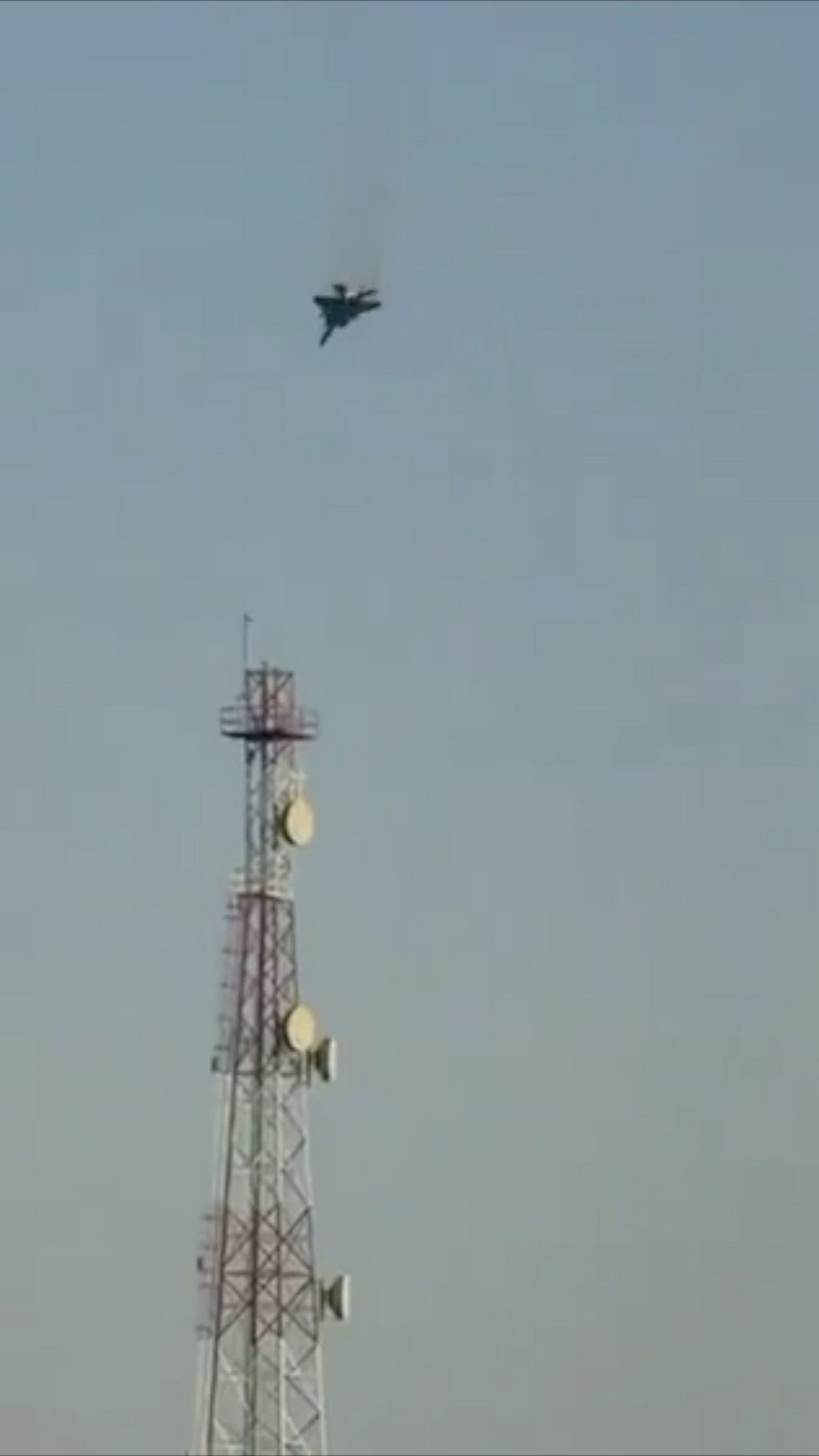
Kuwait Confirms Multiple US Military Crashes: F-15 Pilot Survives, Probe On
In a series of concerning incidents that underscore the complexities and inherent risks of military operations, Kuwaiti authorities have officially confirmed the crash of multiple US military aircraft, including an F-15 fighter jet. While investigations are still in their nascent stages, a critical detail has emerged as a beacon of relief: all crew members involved survived the crashes. The most notable incident, widely captured and circulated online, involved an F-15 fighter jet, with its pilot successfully ejecting and safely recovered. This high-profile US F-15 crash in Kuwait has ignited a flurry of speculation regarding its cause, ranging from mechanical failure to more alarming possibilities of hostile action or even friendly fire.
The incident on the morning of March 2nd sent ripples across the region, especially given the ongoing geopolitical tensions. While official channels maintain that the investigations are ongoing, the swift confirmation of pilot survival has brought a sense of cautious optimism amidst the gravity of the events. As the world watches, the focus remains on understanding the precise circumstances that led to these crashes, particularly the dramatic F-15 crash in Kuwait, and what implications they might hold for regional security and aviation safety protocols.
Dramatic Scenes Unfold: Pilot's Miraculous Survival & Eyewitness Accounts
The immediate aftermath of the F-15 crash was characterized by gripping visuals that quickly spread across social media platforms. Videos purportedly showing the American pilot ejecting from the stricken aircraft just moments before impact have been widely shared. These harrowing images underscore the incredible speed and efficiency of modern ejection systems, which are designed as a last resort to save pilots in catastrophic situations. The footage clearly depicts the F-15, a powerful twin-engine fighter, descending rapidly before the pilot's seat ignites, propelling him skyward and away from the plummeting jet.
Equally compelling is the subsequent video footage, which captures the pilot, seemingly unharmed, being assisted by local Kuwaiti citizens. Reports indicate that these compassionate individuals swiftly transported the pilot to safety, highlighting the strong ties and readiness to assist between the local populace and the stationed US military personnel. The aircraft reportedly came down within a 10-kilometer radius of the Ali al-Salem Air Base, a significant US military installation in Kuwait. While initial reports from outlets like CNN speculated on the aircraft being an F-15E or F/A-18 due to its twin-engine configuration, the prevailing narrative and subsequent information have coalesced around the F-15, a cornerstone of US air power. The successful rescue by locals not only speaks volumes about community spirit but also underlines the importance of rapid response in such critical incidents. It serves as a stark reminder of the inherent dangers faced by military aviators daily and the sophisticated safety mechanisms in place to mitigate those risks.
The F-15 in Question: A Pillar of US Air Power
The F-15 Strike Eagle is an emblem of American aerial supremacy, a designation that adds considerable weight to its recent crash. Known for its exceptional performance, the F-15 Strike Eagle is a versatile, all-weather multirole fighter-bomber. Its design allows it to excel in both air-to-air combat and precision ground strike missions, often operating at long ranges. Military analysts widely regard it as one of the most successful strike aircraft in the US arsenal, celebrated for its potent combination of high speed, substantial payload capacity, and impressive range. These characteristics make it an indispensable asset in maintaining regional security and projecting power, particularly in strategic areas like the Middle East.
The presence of F-15s at bases such as Ali al-Salem in Kuwait is crucial for US Central Command's operations. They are vital for surveillance, deterrence, and rapid response capabilities across a volatile region. However, it's also worth noting that Kuwait's own air force operates F/A-18 Hornets, adding a layer of initial complexity to identifying the precise aircraft type in the immediate aftermath of the incident. Regardless, the loss of any advanced military aircraft, especially a combat-proven platform like the F-15, is a significant event. It necessitates a meticulous investigation to not only determine the cause but also to safeguard against future occurrences and uphold the integrity of such critical defense assets. Understanding why an F-15 crashed in Kuwait is paramount for both operational safety and regional stability.
Unraveling the Mystery: Potential Causes and Geopolitical Tensions
The ongoing investigation into the F-15 crash is critical, not just for aviation safety but also due to the sensitive geopolitical climate in the Middle East. With official statements confirming the crashes but refraining from specifying causes, speculation has naturally filled the void. Two primary theories have gained traction, each carrying significant implications: hostile action from an adversary or an unfortunate instance of friendly fire.
- Iranian Attack: This theory is fueled by the timing of the incident. On the very morning of March 2nd, the US Embassy in Kuwait issued a security warning advising about potential new missile and drone attacks from Iran. The backdrop of escalating tensions between the US and Iran, particularly concerning proxy groups in the region, makes this a plausible, albeit concerning, scenario. If confirmed, an Iranian role would significantly escalate regional instability and demand a strong international response.
- Friendly Fire: Conversely, OSINT (Open-Source Intelligence) channels have floated the possibility that the US military aircraft might have been inadvertently shot down by Kuwaiti air defense systems. Given that Kuwait also operates sophisticated air defense capabilities and often conducts joint exercises with US forces, the potential for a "blue-on-blue" incident, though rare, cannot be entirely discounted without a thorough investigation. Such events, while tragic, can occur due to misidentification or technical malfunctions during complex operational environments. This scenario, while less overtly hostile, would still necessitate a rigorous review of coordination and identification protocols.
- Other Possibilities: While less dramatic, mechanical failure, engine trouble, or even pilot incapacitation remain standard considerations in any aircraft accident investigation. The F-15, while robust, is a complex machine, and unforeseen technical issues can always arise, especially during demanding flight profiles or adverse weather conditions.
Determining the true cause behind the F-15 Down in Kuwait: Was it Friendly Fire or an Iranian Attack? will be crucial. It will inform future security postures, operational procedures, and potentially diplomatic responses. Kuwaiti authorities have urged the public to rely solely on official sources for information, a vital piece of advice in an era rife with misinformation and rapid, unverified viral content.
Aviation Safety and US Military Presence in the Middle East
The incidents in Kuwait serve as a stark reminder of the inherent risks associated with military aviation, particularly in a region as strategically vital and volatile as the Middle East. The US military maintains a significant presence across the Arabian Gulf, critical for global stability, counter-terrorism efforts, and deterrence against potential adversaries. This sustained operational tempo, involving complex aircraft and demanding missions, naturally elevates the potential for accidents.
Military aviation safety is a paramount concern for all armed forces. It involves rigorous training, continuous maintenance, advanced technological safeguards, and comprehensive emergency response protocols. The successful ejection and recovery of the F-15 pilot speak volumes about the effectiveness of these safety systems and the rapid response capabilities on the ground. Every crash, regardless of its cause, triggers an exhaustive investigation process aimed at preventing future occurrences. This process typically involves:
- Data Retrieval: Analyzing flight recorders (black boxes) and maintenance logs.
- Site Analysis: Forensic examination of the crash site and debris.
- Witness Interviews: Gathering accounts from ground personnel, other pilots, and eyewitnesses.
- Systematic Review: Examining environmental factors, operational procedures, and human factors.
The findings from this probe will not only shed light on why the F-15 crashed in Kuwait but also offer invaluable insights that can refine training, improve aircraft design, and enhance safety across the entire fleet. The US commitment to transparency in these investigations, once concluded, helps foster trust and ensures continuous improvement in military aviation standards globally.
Conclusion
The confirmation of multiple US military aircraft crashes in Kuwait, most notably the F-15 incident where the pilot miraculously survived, underscores the ongoing challenges and risks inherent in maintaining a robust military presence in a dynamic region. While the immediate relief of no fatalities is significant, the underlying causes of these crashes remain a subject of intense investigation and speculation. Whether the result of a technical malfunction, an unfortunate friendly fire incident, or a more sinister act of aggression, the findings of the official probe will undoubtedly influence future operational strategies, regional alliances, and aviation safety protocols.
As the Kuwaiti Ministry of Defense continues its thorough inquiry, it is imperative for all stakeholders to await conclusive official statements. The incidents serve as a powerful reminder of the human element in military operations—the courage of the pilots, the effectiveness of advanced safety systems, and the compassionate response of local communities. Understanding precisely what transpired will not only honor the commitment to transparency but also contribute to the vital mission of ensuring the safety and effectiveness of military aviation worldwide.