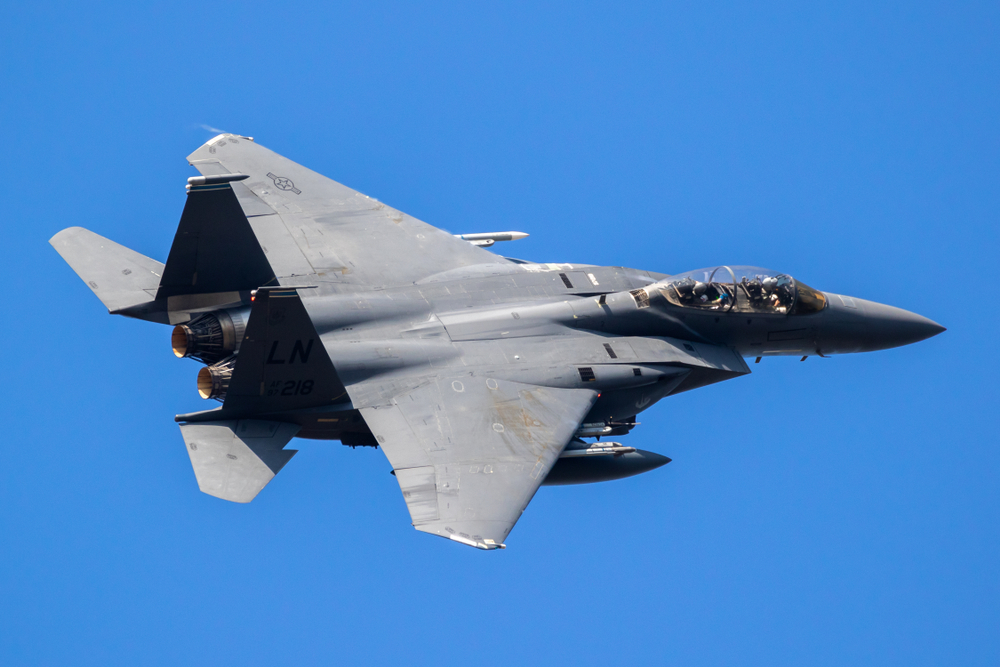
US F-15 Crash in Kuwait: Pilot Survives Dramatic Ejection as Video Evidence Emerges
In a gripping incident that unfolded recently, an American F-15 fighter jet crashed in Kuwait, sending shockwaves through the region. The event, which quickly garnered global attention, was marked by the dramatic escape of its pilot, who successfully ejected from the falling aircraft. Initial reports and widely circulated videos provided a stark account of the incident, confirming the pilot's survival and subsequent safe recovery. While the exact cause of the crash remains under official investigation, the incident has sparked considerable speculation, highlighting both the inherent risks of military aviation and the advanced safety protocols designed to protect personnel.
Dramatic Ejection and the Pilot's Miraculous Survival
The harrowing moments of the F-15 crash in Kuwait were captured in widely circulated video footage, showing the powerful American fighter jet descending rapidly before a clear puff of smoke signaled the pilot's successful ejection. This critical action, occurring mere seconds before the aircraft impacted the ground, underscores the incredible engineering behind modern ejection systems and the pilot's quick reflexes under extreme duress. Such systems are designed to propel a pilot clear of a stricken aircraft at high speed and altitude, deploying a parachute automatically to ensure a safe landing. In this particular incident, the system performed flawlessly.
Further video evidence that emerged showed the pilot, seemingly unharmed and collected, after landing. Local residents, demonstrating remarkable responsiveness, quickly located the downed airman and transported him to a safe location, reportedly in the trunk of a vehicle. This impromptu rescue highlights the human element in such emergencies, where quick thinking and community support can be as crucial as advanced military technology. The relief that swept across social media and news outlets following confirmation of the pilot's safety was palpable, serving as a testament to the universal concern for human life, especially in high-risk professions like military aviation.
The crash site was identified as being approximately 10 kilometers from the significant US airbase, Ali Al Salem, in Kuwait. While the precise model of the F-15 involved was initially debated, with some analyses suggesting it could be an F-15E Strike Eagle or even an F/A-18 (which Kuwait also operates), the focus quickly shifted from identification to the circumstances surrounding the crash and the pilot's incredible survival.
Unraveling the Mystery: Potential Causes and Geopolitical Tensions
The immediate aftermath of the F-15 crash saw a flurry of speculation regarding its cause, fueled by regional tensions and a lack of immediate official statements. One of the most audacious claims came from Iranian sources, suggesting they had successfully targeted the American fighter jet. However, these claims were swiftly met with skepticism and lacked any credible substantiation from independent or official channels. Historically, such incidents often become focal points for geopolitical rhetoric, and it's crucial to rely on verified information rather than unsubstantiated claims.
Another theory that gained traction in some circles, including discussions among OSINT (Open Source Intelligence) channels, was the possibility of "friendly fire." This hypothesis suggested that the aircraft might have been accidentally brought down by Kuwaiti air defense systems. Kuwait does operate its own sophisticated air defense capabilities, and during periods of heightened alert, the risk of misidentification or operational error, while rare, cannot be entirely dismissed without thorough investigation. This particular theory resonates with the broader context of military operations in complex airspaces where multiple friendly forces operate.
Adding another layer to the already tense situation, the US Embassy in Kuwait had issued a security alert on the morning of March 2nd, the day of the crash. The warning cautioned about the potential for new missile and drone attacks from Iran. While there is currently no direct link established between this warning and the F-15 incident, it underscores the elevated state of alert and the volatile security environment in the region at the time. Such advisories highlight the constant vigilance required by military forces operating in areas prone to geopolitical instability and the ever-present threat of hostile actions.
For more detailed insights into the competing theories surrounding the incident, you can read our analysis on F-15 Down in Kuwait: Was it Friendly Fire or an Iranian Attack?
The F-15 Strike Eagle: A Pillar of US Airpower
The aircraft at the center of this incident, likely an F-15, belongs to a lineage of one of the most successful and revered fighter jets in modern military history. The F-15 Strike Eagle, specifically, is an American all-weather multirole fighter-bomber. Its design allows it to excel in both air-to-air combat and precision ground strike missions over long distances. Renowned for its unparalleled combination of speed, substantial payload capacity, and impressive range, the F-15 Strike Eagle has consistently proven its worth as a cornerstone of US airpower and a vital asset for its allies.
Introduced in the late 1980s, the F-15E variant was developed to perform deep interdiction missions without requiring escort fighters, a testament to its formidable capabilities. Its advanced avionics, including a sophisticated radar system, enable it to navigate and engage targets in any weather condition, day or night. The F-15's robust construction and powerful twin engines contribute to its reputation for durability and operational reliability, even in challenging environments. The survival of its pilot in this recent crash further highlights the emphasis on crew safety integrated into the design and operational protocols of these advanced military aircraft.
Operating such high-performance aircraft inherently carries risks, ranging from mechanical failures to the complexities of operating within a shared airspace. The F-15's operational history, however, is largely a narrative of success, with an exceptional combat record. This incident, while unfortunate, serves as a stark reminder of the inherent dangers faced by military aviators daily, even during routine operations or training exercises, underscoring the constant need for vigilance, maintenance, and adherence to strict operational guidelines.
Kuwait's Official Stance and the Ongoing Investigation
In response to the growing public interest and varied speculations, official statements from Kuwait provided much-needed clarity on certain aspects of the incident. A spokesperson for the Kuwaiti Ministry of Defense confirmed that on the morning of March 2nd, not just one, but "several American military aircraft" had experienced incidents resulting in crashes. Crucially, the official emphasized that all crew members involved in these separate events survived, reiterating the effectiveness of the pilots' training and the aircraft's safety systems.
The Kuwaiti Ministry of Defense also underscored that a comprehensive investigation is actively underway to determine the precise causes behind these occurrences. They urged the public and media to rely solely on official sources for information, a standard and prudent appeal aimed at preventing the spread of misinformation and unchecked rumors. This stance is vital in maintaining accurate public discourse and ensuring that the investigative process remains untainted by speculation.
Such incidents involving military aircraft are complex and often require extensive technical analysis, including examination of flight recorders, wreckage, and interviews with personnel. The investigative teams will likely scrutinize all potential factors, from mechanical malfunction and pilot error to external influences or environmental conditions. The full findings of such an investigation can take considerable time to compile and release, but they are crucial for improving aviation safety and understanding the operational challenges faced by military forces. This commitment to a thorough probe ensures accountability and facilitates learning from such unfortunate events.
For more on the broader implications of these events and Kuwait's official communications, refer to Kuwait Confirms Multiple US Military Crashes: F-15 Pilot Survives, Probe On.
Conclusion
The F-15 crash in Kuwait serves as a potent reminder of the inherent risks associated with military aviation, even for some of the world's most advanced aircraft. The dramatic ejection and subsequent survival of the pilot were a testament to cutting-edge safety technology and the pilot's training, turning a potentially catastrophic event into a miraculous escape. While initial reports sparked widespread speculation regarding the cause, including claims of hostile action and friendly fire, official statements from Kuwait have confirmed the survival of all personnel involved in multiple concurrent incidents and emphasized an ongoing, comprehensive investigation. As the international community awaits the official findings, the incident underscores the critical importance of reliable information sources, the bravery of military aviators, and the unwavering commitment to safety protocols in high-stakes operations.